

“百节年为首”,春节作为中国最隆重的节日,承载着人们对新一年的美好祈愿和希望。在各地,崇尚传统文化的客家人对春节的年俗尤为重视,从他们的年俗中我们可以感受到客家人深厚的文化底蕴和独特的风俗习惯。
客家人的年俗丰富多样,虽繁琐却有深意,主要包括三个核心内容,即置办年货、祭祀和祈福。年俗中不仅饱含客家人对家乡的热爱之情,更表达了他们对家乡传统文化的认同与崇尚,他们希望这种对生活的美好祝福与对未来的深情展望可以长长久久、代代传承。
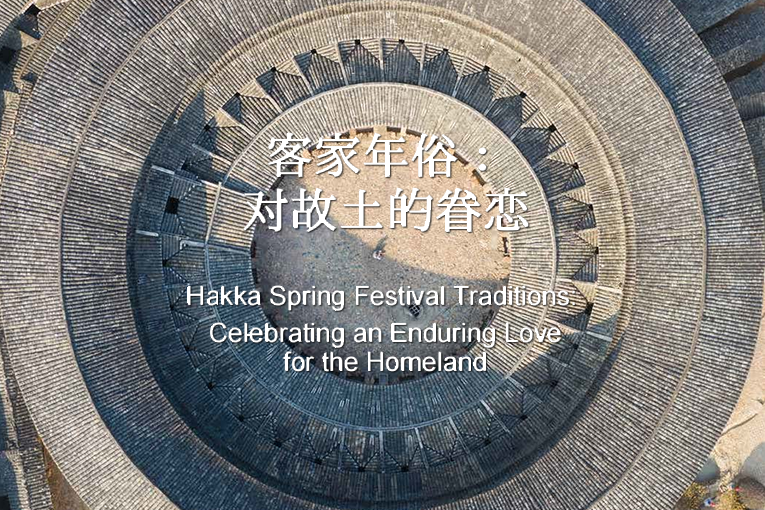
让我们一起阅读《孔子学院》中的文章《客家年俗:对故土的眷恋》,感受客家热闹喜庆的春节氛围以及客家人对故土的眷恋。
供稿:广东财经大学
Guangdong University of Finance & Economics
作者:张琼 Zhang Qiong
翻译:汤敏 Tang Min
“要问客家哪里来?客家来自黄河边;要问客家哪里住?逢山有客客住山。”
Where do the Hakka people come from? They come from the banks of the Yellow River. Where do the Hakka people live? The Hakka people live anywhere there are mountains and hills.
这首民歌生动地道出了客家人的迁徙路线。地处中国华南地区的广东有广府、客家、潮汕三大族群。据说,客家人从中原南迁而来,他们一路南下,最终在粤东北和粤北,包括梅江、东江和北江流域的丘陵山区与盆地中安家落户。
This folk song vividly portrays the migration route of the Hakka people, one of the three major folk groups in present-day Guangdong Province in southern China, alongside the Guangfu and Chaoshan communities. It is said that the Hakka people migrated from the Central Plains all the way to the south, and eventually settled in the hilly areas and basins along Meijiang River, Dongjiang River, and Beijiang River in northern and northeastern Guangdong.
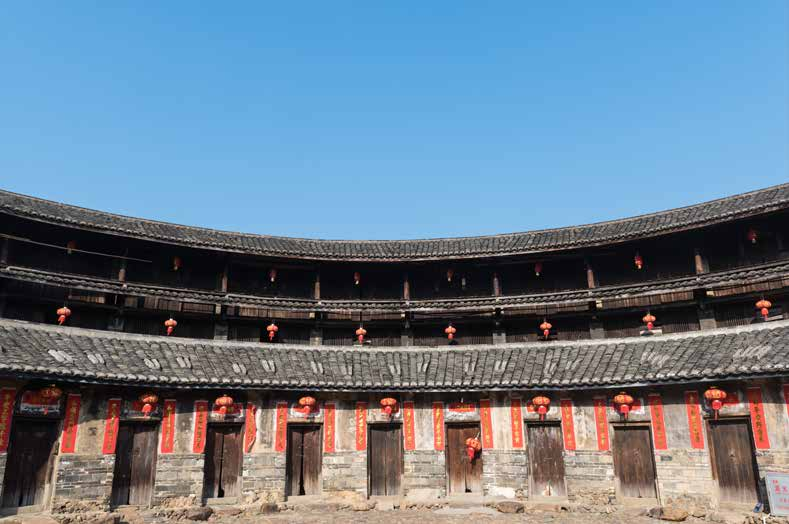
贴上春联的客家土楼
不同于广府人的“敢为天下先”、潮汕人的“爱拼才会赢”,客家人具有中原文化的深厚底蕴,秉承了儒家君子之风,加之长时间漂泊流离后到达新环境迎接诸多生存挑战,客家人还有着耕读传家的传统。在习俗上,就表现为特别注重仪式,这在中国人最隆重的传统节日——春节中尤其明显。
Unlike the Guangfu people, who advocate being the pioneers in the world or the Chaoshan people who believe in success belongs to the daring, the Hakka people, deeply influenced by the profound culture of the Central Plains, exhibit qualities of a Confucian gentleman. Their serene and stable way of life, centered around agriculture and education became even more prominent as they faced and overcame the challenges upon arriving at their new homeland after the long, arduous journey. As a result they hold a deep reverence for traditions and have a strong sense of ritual, which is most evidently reflected in their celebration of Spring Festival, the most important traditional festival in China.
腊月二十五被客家人称为“入年架”。这一天起,春节的大幕徐徐拉开,客家人放下手头的工作,开始为春节忙碌。客家人的春节有三块核心内容:一是置办年货;二是祭祀;三是祈福。
On the 25th day of the 12th lunar month, known as ru nianjia (entering the festive period), the grand curtain of the Spring Festival celebrations slowly rises. The Hakka people set aside their daily tasks to prepare for the upcoming festival with their focus on three key activities: preparing festival items, offering sacrifices and seeking blessings.

客家人的年节食物,主要有年糕、黄酒和酿豆腐等。客家人的年糕,又称“粄”(bǎn) 或“煎堆”,是走亲访友的必备之物。客家人还有酿酒的习俗,用糯米加白酒发酵酿制,最终成品呈黄色,故俗称“黄酒”。这种酒度数不高、甜中带酸、香醇可口,是客家人吃团圆饭和招待客人的必备饮品。酿豆腐也是必不可少的一道佳看,客家人酿豆腐,就像北方人包饺子、壮家人包粽子一样充满年味。
A traditional Hakka festival meal typically consists of rice cake, yellow rice wine, and stuffed tofu, among others. The rice cake, locally known as ban or jiandui, is an essential gift for festival visits. The Hakka people also have a tradition of brewing yellow rice wine using glutinous rice and baijiu (white spirit). The final product is yellow in color, hence the name yellow rice wine. This mild, fragrant drink has a sweet and slightly sour flavor, making it a favorite drink during family gatherings and when hosting guests. Stuffed tofu also takes on special significance during this season, much like dumplings in northern China and zongzi (sticky rice dumplings) among the Zhuang ethnic community, representing the festive spirit of the occasion.
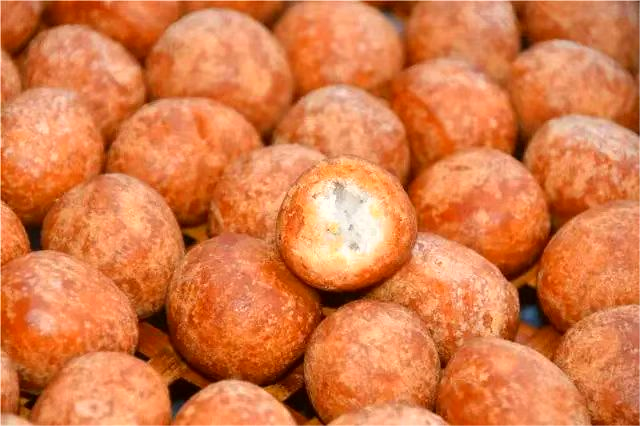
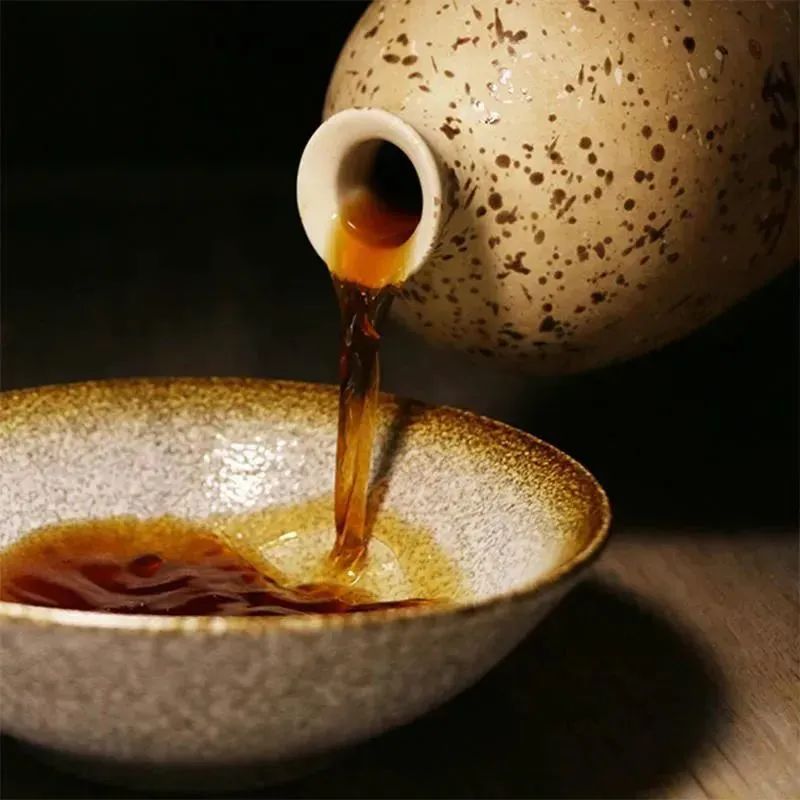
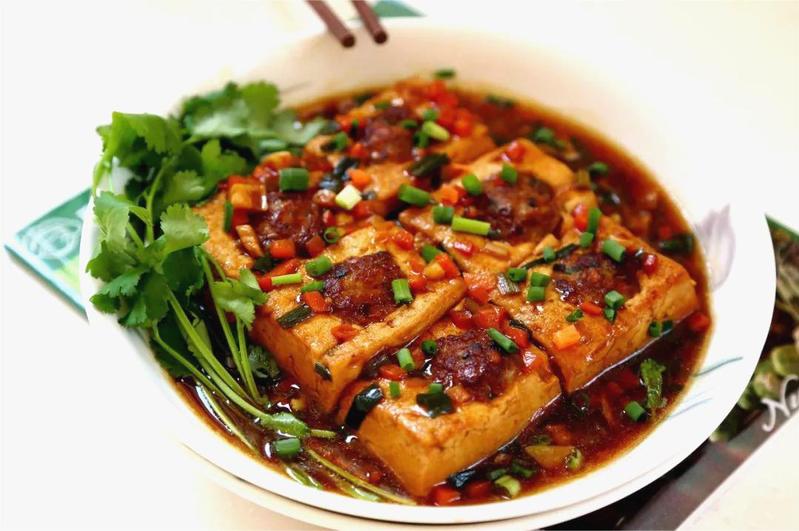
客家传统美食——粄、黄酒、酿豆腐

祭祀活动几乎贯穿客家人的整个春节。年二十七到年二十九,客家人要祭祀“伯公”“伯婆”和“村神”等守卫一方的小神,通常由老年妇女或小媳妇带着小孩去祭拜。大年三十,客家人要带上“三牲”“斋盘”,去祖祠祭拜祖先。“三牲”主要是指猪、鸡和鱼,“斋盘”分别盛有发粄(寓意“年年发财”)、苹果(寓意“四季平安”)、柑橘 (寓意“年年吉利”)、柚子(寓意“年年富有”)和财宝(代表祖公、祖婆衣伯公、伯婆衣,观音衣,冥币,花边等)。这是过年非常隆重的一项习俗,也是客家人雷打不动的仪式。此时,家族成员都会返回老祖屋,焚香叩首,祭拜祖先,追思祖先功德。
The Hakka worshiping activities last throughout the entire Spring Festival period. Between the 27th and 29th of the 12th lunar month, elderly women in the family or young mothers take the children to worship local deities who guard the community, such as Bogong and Bopo (both Gods of the Land)and the Village God. On Chinese New Year's Eve, the Hakka people go to the ancestral shrines for ancestral worship. They bring with them the three animal offerings (pork, chicken, and fish), and the vegetarian offerings, including faban (symbolizing wealth), apples (symbolizing safety), tangerines (symbolizing good luck), and pomelos (symbolizing abundance). They also bring with them symbolic treasures,representing ancestral clothing, clothing for the deities, paper money for the deceased, and decorations. These are solemn and deeply rooted traditions for the Hakka people. At this time each year, all family members return to the ancestral home, burn incense, kowtow, worship their ancestors, and reflect on the merits of their forebears.
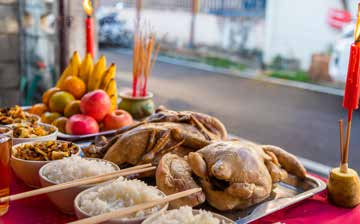
客家斋盘
在设置年夜饭席位时,桌上会多放几副碗筷,以示请祖先回来一同过年。开席前,客家人要先给祖先筛酒,将酒酒地,然后放鞭炮,吃团年饭。大年初一凌晨,客家人会选择吉时燃放爆竹,开门迎接财神并上香,取“开门大发”之意。正月初五,出年界,是灶神回家之日,客家人会把厅堂的祖宗画像收起来,晚上摆放牲礼果品敬灶神。在春节期间,客家人的龙灯、狮队还要到村中各庙宇和祠堂向神灵及祖先拜年。
Extra bowls and chopsticks are always prepared on Chinese New Year's Eve dinner table as a gesture of inviting the ancestors to join the family reunion. Before the feast, the Hakka people go through a series of rituals: sieving the wine, pouring it on the ground, and setting off firecrackers. In the early morning of the next day, the Hakka people set off firecrackers at an auspicious time, open the gate to welcome the Wealth God (a propitious ritual symbolizing prosperity in the coming year), and burn incense. On the fifth day of the new year, known as the end day of the Chinese New Year period and the day when the Kitchen God returns, the Hakka people put away portraits of the ancestors and set up offerings to the Kitchen God, such as sacrificial items and fruits, in the evening. During the festive days, the Hakka people perform dragon lantern dances and lion dances in temples and ancestral shrines to pay homage to the deities and their ancestors.

祈福活动包括守岁、贴春联、放孔明灯等。
Blessings-seeking activities for the Hakka people include vigil for Chinese New Year's Eve, putting up Spring Festival couplets, and releasing Kongming sky lanterns.
团年饭后,客家人开始“守岁”。家家户户通宵达旦,灯火明亮,这被称为“点岁火”;火笼加炭则被称为“沤火桶”。
After Chinese New Year's Eve dinner, the Hakka people begin their shou sui (keeping vigil for the Chinese New Year's Eve). They stay awake all night with the rooms brightly lit a tradition referred to as dian suihuo (lighting the fire of the new year). Additionally, they light a charcoal burner, a custom known as ou huotong.
除夕夜,客家人还要贴春联。客家人不仅会在大门口贴对联,还会在大厅里贴大红的“福”字,在猪牛圈里贴上“六畜兴旺”的红条幅,甚至会在用具上贴红纸条。这被称为“封岁”“上红”。
On Chinese New Year's Eve, the Hakka people also put up Spring Festival couplets. They not only paste the couplets at the gate but also hang the Chinese character 福 (fu, meaning blessing) with a red background in the living room, along with red banners with the characters 六畜兴旺 (liuchu xingwang, meaning prosperity for the six essential farm animals) in the pen. Some families even stick red paper strips to household items. This is known as feng sui (sealing the year) or shang hong (putting up red decorations.)
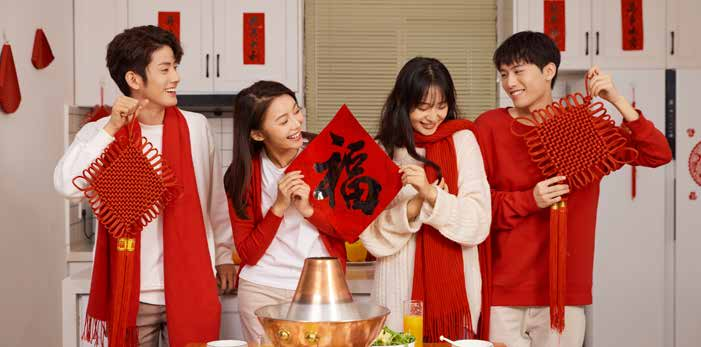
传统年俗——贴春联、挂中国结
客家人的春联写法很有特色。通常,大门两旁是该姓氏祖先立的堂联[以楹(yíng)联的形式对家族堂号的补充说明亦称“祠联”,主要用于家族祠堂]。大门上方的横批是祖先立的堂号,说明家族的来源地。比如,于姓立“河南堂”,说明于姓祖先来自河南;饶姓立“平阳堂”,说明饶姓祖先来自山西平阳;李姓立“陇西堂”,说明李姓祖先来自甘肃陇西。堂联一般八个字,如文姓堂联为“四夷贤相,尽节勤王”:上联说北宋山西介休人文彦博一生做了四朝宰相,长达50年;下联指江西吉水文天祥,在南宋末年起兵勤王,为国尽忠,壮烈牺牲,让子孙后代牢记祖先的荣光。
The layout and content of the Hakka Spring Festival couplets are distinctive. Typically, above the main entrance of the clan hall is a horizontal scroll stating the clan's place of origin. For example, the Henan Hall scroll in the Yu Shrine indicates its ancestral origin in Henan Province; similarly, the Pingyang Hall of the Rao Shrine and the Longxi Hall of the Li Shrine indicate their respective origins. Below the horizontal scroll and on both sides of the entrance are a pair of couplets known as tanglian, yinglian, or cilian, which usually provide more information about the clan. For instance, the tanglian of the Wen Shrinereads 四夷贤相,尽节勤王. The first four characters show that Wen Yanbo from Jiexiu, Shanxi Province in the Northern Song Dynasty served as prime minister for four emperors for 50 years. The last four characters tell the story of Wen Tianxiang from Jishui, Jiangxi Province, who died heroically in defense of his country in the late Southern Song Dynasty. The couplets call on the descendants of the Wen clan to honor and celebrate the glorious legacy the ancestors left for them.
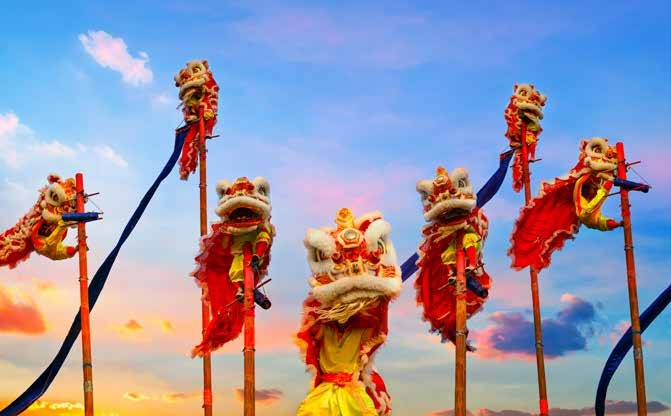
热闹非凡的舞狮表演
此外,客家人过新年有打狮之戏,花灯以游龙灯为多,各处张灯结彩,人来人往,热闹非凡。正月十五日元宵节,春节的最后一天,客家人还会放孔明灯祈福,祈祷新的一年顺心如意。
During Chinese New Year celebrations, the Hakka people showcase various dance performances, with dragon lanterns and lion dances being the most common. The streets are bustling with people, adorned with lanterns, and resonate with a lively atmosphere. The Lantern Festival on the 15th day of the first lunar month, marking the end of the Spring Festival period, is particularly vibrant. On this day, the Hakka people release Kongming sky lanterns, wishing for a lucky year ahead.
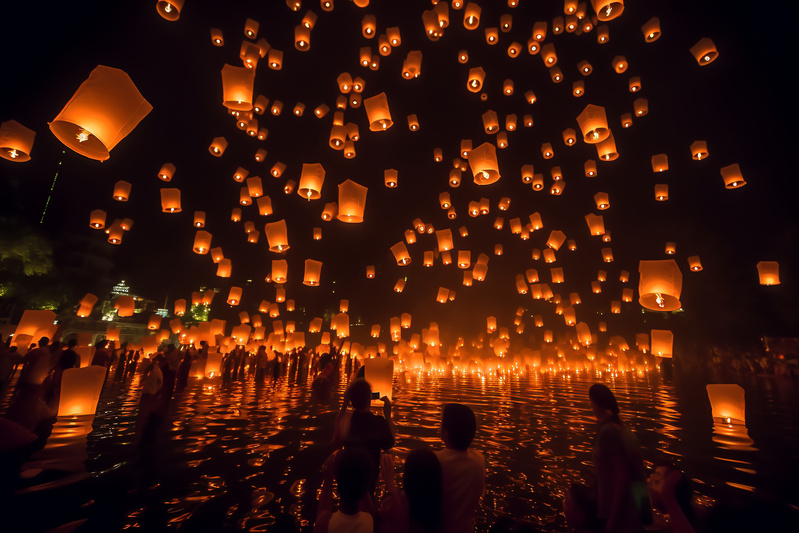
放飞孔明灯祈福
看似繁琐的年俗体现了客家人与故土深深的羁绊。客家人在万不得已之下,背井离乡,对故土却始终难以忘怀。于是他们把对故土的思念寄托在对自身家族历史传统的保留上。千百年来,这种寄托逐渐演变成一种崇尚祖训、铭记历史、注重家教、爱惜名节的文化。“宁卖祖宗田,不卖祖宗言”,传统、语言、文化习俗的完整保存,是客家人对家乡无尽的牵挂,这就是客家人特别注重仪式的原因。当然,随着时间的推移,一些仪式已经简化,不同地区客家人的年俗也可能有所不同,但融于客家人血脉中的对故土的牵挂却始终不变。
The seemingly complicated customs symbolize the profound attachment the Hakka people have for their homeland. Despite being forced to relocate, they preserve fond memories of their homeland. In subsequent years, this enduring affection transformed into a steadfast commitment to their ancestral traditions, which, over thousands of years, has evolved into a culture that prioritizes ancestral teachings and family education, values reputation, and highlights the importance of remembering one's history. Better to lose ancestral land than to lose the ancestral language. The Hakka people hold a profound love for their homeland, leading them to prioritize the preservation of their traditions, language, culture, and customs. As time goes by, some rituals may have been simplified, and practices may differ in different Hakka communities. Nevertheless, their enduring, unyielding love for their homeland, woven into the very fabrics of their being, remains unchanged.